Showing posts with label Education. Show all posts

Wednesday, February 16, 2011

ABOUT: SCHNAPPS

Schnapps is a type of distilled alcoholic beverage. The English word schnapps is derived from the German Schnaps (plural, Schnäpse), which can refer to any strong alcoholic drink but particularly those containing at least 32% ABV (64 proof). American schnapps, however, are liqueurs. Schnaps is a Low German noun that means swallow; it has been documented in its High German meaning since before the 18th century.

German Schnapps
German Schnaps is clear, colorless, and has a light fruit flavor. It is distilled from fermented fruit must, is bottled with no added sugar, and normally contains about 40% ABV (80 proof). Its appearance and taste are the same as that of eau de vie, but this French term is seldom used in German-speaking countries. In Austria, Switzerland, and southern Germany, these beverages are commonly called Obstler or Obstbrand (from the German Obst, fruit).[4] Obstler are associated with the southern part of the German language area. In northern Germany, almost all traditional distilled beverages are grain-based.

Equivalent beverages exist all over central and southeastern Europe, where they are generically called rakia (e.g., slivovitz and palinka).

A broader definition of Schnaps includes other German-made spirits such as Kräuterlikör (e.g., Jägermeister), Korn, Kümmel, German gin (e.g., Steinhäger), and generally any distilled beverage.

The main kinds of fruit used for German Schnaps are apples, pears, plums, and cherries — listed here in order from the least expensive to the most. Apricot is another popular fruit that is often used in Austrian Schnaps (Marillenschnaps). Fruits other than these five kinds are rarely used for German Schnaps. Apples are usually used together with pears to make fruit brandy (Obstwasser). Pears alone are used to produce Poire Williams (Williamsbirne). Plums make Zwetschgenwasser, and cherries make Kirschwasser.

A raspberry-flavored spirit called Himbeergeist is also a Schnaps, although it is not produced by means of fermenting raspberries (Himbeeren), which produce a low yield of alcohol due to their low sugar content. Instead, rectified spirit is infused with fresh raspberries, and this mixture is then distilled.

American Schnapps
The label on a bottle of American schnapps, peach-flavored and bottled at 15% ABV.

American schnapps are alcoholic beverages that are produced by mixing neutral grain spirit with fruit flavors or with other flavors. This mixture is then bottled with added sugar and (usually) glycerine, producing a smooth, syrup-like drink. Their alcohol content can be anywhere between 15% and 50% ABV (30–100 proof).

American schnapps can be bought in a very wide variety of flavors, including aniseed, apricot, banana, blackberry, black currant (aka crème de cassis), butterscotch, cherry, cinnamon, coffee, lemon, mandarin orange, menthol mint, peach, peppermint, root beer, and sour apple. These drinks technically fall into the category of liqueurs because of their added sugar content.

Tuesday, February 15, 2011

ABOUT: SAKE

What is Sake?
Sake is typically referred to as "rice wine" but is produced by brewing, in the same way as beer. It is a clear, low proof, alcoholic beverage that is made from rice, yeast, water and koji.

Sakes are categorized based on grade, style and amount of polishing the rice receives and these are important factors when picking out a good bottle of sake. A label may have each of these three elements on it to indicate the sake's quality (i.e. Junmai Ginjo Genshu).


Basic Grades of Sake

  • Junmai: No additional alcohol is added to this sake and this is the purest grade of sake. If a label doesn't say "junmai" then some additive has been used.
  • Honjozo: This sake includes a small amount of brewer's alcohol to bring out its flavors and is only produced in Japan.
  • Futsu-shu: This is a very basic sake without any regulations and is considered to be the quality of a table wine. Because heat masks impurities in sake, this one is typically served hot. 

Styles of Sake
Most sake is bottled at 15-16% alcohol by volume with the exception of genshu.

  • Genshu: Full strength sakes that are undiluted and typically bottled at 18-20%.
  • Koshu: Sake that has been aged.
  • Nama: A sake that is unpasteurized and needs to be refrigerated.
  • Nigori: This sake tends to have a cloudy appearance because of a lack of filtering that others go through. 

Rice Polishing
Rice is polished to remove the husk, bran and a portion of the germ. The sake designations below indicate the amount of polishing the rice has received and is the primary factor in finding a good sake. The lower the polishing, the higher quality that sake is considered to be because more flavor is left in the rice.

  • Dainginjo: Ultra-premium sakes polished 35-49%.
  • Ginjo: This rice is polished 50-60% making it a premium sake.
  • Tokubetsu Junmai: Junmai from rice polished at least 65%.
  • Junmai: Traditionally a rice that has been polished 70%, but now all the producer has to do is indicate the percentage on the bottle. 

How to Store Sake
As stated above, sake is not a wine so it should not be stored like a wine because they do not improve with age. Here are a few tips for keeping your sake fresh...

  • Most sake labels will have a bottling date on them and it is best to drink them as close to this date as possible.
  • Nama sake should be refrigerated because it is not pasteurized.
  • Unopened bottles should be kept in the refrigerator and can stay there for up to 16 months, though if you intend on opening it within a week a wine chiller will suffice.
  • Opened bottles of sake should be capped and refrigerated and will lat around 2 weeks. 

How to Drink Sake
There are two ways to drink sake straight, either hot or cold, however the premium sakes are best chilled while lower grades like futsu-shu are best served warm. There are many traditional sake sets available that include small cups and a small carafe (usually also heat-proof) which you can use to serve sake to guests. It is also appropriate to pour sake for the person next to you and allow them to do the same for you, never pouring your own if you have company.

Monday, February 14, 2011

ABOUT: GIN

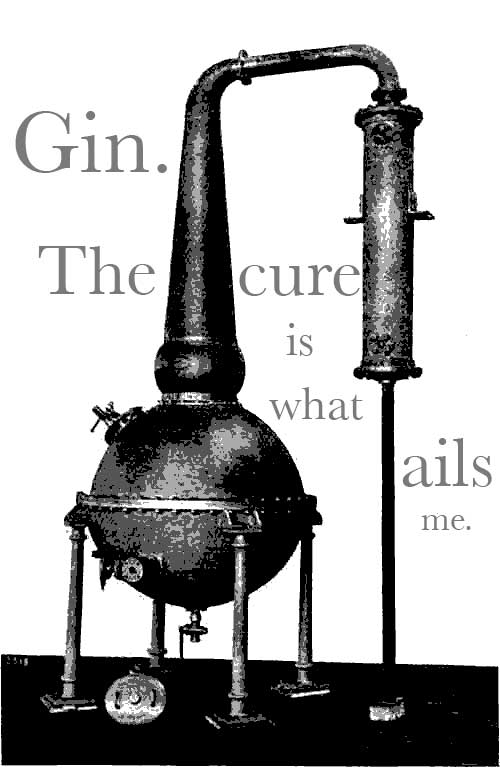
Gin was created by Dr. Franciscus Sylvus, a Dutch chemist, in the 16th century as an attempt to cleanse the blood of those suffering from kidney disorders. Sylvus named his creation genièvre, French for juniper. Mass production of gin in England soon followed as King William III used his grudge against France to ban expensive liquor imports from that country and made gin affordable for the masses.

Production
Gin is a light-bodied, liquor made of a mash of cereal grain, usually corn, rye, barley and wheat that has few congeners. The main flavor and aroma notes are contributed by juniper berries. Other botanicals that are often used in gin include coriander, lemon and orange peels, fennel, cassia, anise, almond and angelica. Gin ranges between 80 and 94 proof and manufacturers cannot, by law, qualify their gin by age.

London Dry Gin
London Dry is the benchmark of quality in the world of gin. The flowery and aromatic characteristics of this type of gin are a result of botanicals added during the 2nd or 3rd distillation. The vapors from these flavoring agents reach the alcohol as they pass through a specialized still with an attachment called a gin head. Dry gins are preferred for making Martinis.

Plymouth Gin
Plymouth Gin is a clear, slightly fruity, full-bodied gin that is very aromatic. This style of gin originated in the port of Plymouth on the English Channel, but only one distillery, Plymouth, Coates & Co., has the right to produce Plymouth Gin now. A few cocktails like an Admiral Benbow and Douglas Fairbanks Cocktail specifically call for Plymouth Gin.

Old Tom Gin
Old Tom Gin is a sweeter version of London Dry Gin. Simple syrup is used to distinguish this old style of gin from it's contemporaries. Old Tom was the original gin used for Tom Collins and the gin of choice in the 19th century. Eventhough it was unavailable in the United States as of the 1950's, Old Tom Gin is still sold in England.

Dutch or Genever Gin
Genever Gin, or Schiedam, is the Dutch version of gin. This variety is distilled from malted grain mash similar to whiskey and tends to be lower proof (70-80 proof) than it's English counterparts. Genever Gin is often aged in oak casks for 1-3 years and comes in two styles. Oude (old) Genever is the original style with a straw hue and is relatively sweet and aromatic, while Jonge (young) Genever has a drier palate and lighter body. Enjoy Genever in cocktails like Sweet City.

Sunday, February 13, 2011

ABOUT: COGNAC

Cognac, named after the town of Cognac in France, is a famous variety of brandy. It is produced in the wine-growing region surrounding the town from which it takes its name, in the French Departements of Charente and Charente-Maritime.

As an Appellation d'origine contrôlée, in order to bear the name Cognac, the production methods for the distilled brandy must meet specified legal requirements. It must be made from certain grapes (see below); of these, Ugni Blanc, known locally as Saint-Emilion, is the most widely-used variety today.[citation needed] It must be distilled twice in copper pot stills and aged at least two years in French oak barrels from Limousin or Tronçais. Most cognacs are aged considerably longer than the minimum legal requirement, because cognac matures in the same way as whiskies and wine when aged in a barrel.

Grapes
The wine is a very dry, acidic, thin wine, "virtually undrinkable", but excellent for distillation and aging. It may be made only from a strict list of grape varieties, if it is to carry the name of one of the crus then it must be at least 90% Ugni Blanc (known in Italy as Trebbiano), Folle Blanche and Colombard, although 10% of the grapes used can be Folignan, Jurançon blanc, Meslier St-François (also called Blanc Ramé), Sélect, Montils or Sémillon. Cognacs which are not to carry the name of a cru are freer in the allowed grape varieties, needing at least 90% Colombard, Folle Blanche, Jurançon blanc, Meslier Saint-François, Montils, Sémillon, or Ugni Blanc, and up to 10% Folignan or Sélect.

Fermentation and distillation
After the grapes are pressed, the juice is left to ferment for two or three weeks, with the region's native, wild yeasts converting the sugar into alcohol; neither sugar nor sulfur may be added.[5] At this point, the resulting wine is about 7 to 8% alcohol.

Distillation takes place in traditionally shaped Charentais copper stills, also known as an alembic, the design and dimensions of which are also legally controlled. Two distillations must be carried out; the resulting eau-de-vie is a colourless spirit of about 70% alcohol.

Aging
Once distillation is complete, it must be aged in oak for at least two years before it can be sold to the public. As the cognac interacts with the oak barrel and the air, it evaporates at the rate of about three percent each year, slowly losing both alcohol and water[2] Because the alcohol dissipates faster than the water, cognac reaches the target 40% alcohol by volume in about four or five decades, though lesser grades can be produced much sooner by diluting the cognac with water, which also makes its flavor less concentrated.[2] Since oak barrels stop contributing to flavor after four or five decades, cognac is then transferred to large glass carboys called bonbonnes, then stored for future blending.[2]

Blending
The age of the cognac is calculated as that of the youngest eau-de-vie used in the blend. The blend is usually of different ages and (in the case of the larger and more commercial producers) from different local areas. This blending, or marriage, of different eaux-de-vie is important to obtain a complexity of flavours absent from an eau-de-vie from a single distillery or vineyard. Each cognac house has a master taster (maître de chai), who is responsible for creating this delicate blend of spirits, so that the cognac produced by a company today will taste almost exactly the same as a cognac produced by that same company 50 years ago, or in 50 years' time.[citation needed] In this respect it is similar to the process of blending whisky or non-vintage Champagne to achieve a consistent brand flavor. A very small number of producers, such as Guillon Painturaud and Moyet, do not blend their final product from different ages of eaux-de-vie to produce a 'purer' flavour (a practice roughly equivalent to the production of a single-cask Scotch whisky). Hundreds of vineyards in the Cognac AOC region sell their own cognac. These are likewise blended from the eaux-de-vie of different years, but they are single-vineyard cognacs, varying slightly from year to year and according to the taste of the producer, hence lacking some of the predictability of the better-known commercial products. Depending on their success in marketing, small producers may sell a larger or smaller proportion of their product to individual buyers, wine dealers, bars and restaurants, the remainder being acquired by larger cognac houses for blending. The success of artisanal cognacs has encouraged some larger industrial-scale producers to produce single-vineyard cognacs.

Grades
The official quality grades of cognac are, according to the BNIC (Bureau National Interprofessionnel du Cognac):

  • VS Very Special or three stars: where the youngest brandy is stored at least two years in cask.
  • VSOP Very Special: Old Pale, where the youngest brandy is stored at least four years in a cask, but the average wood age is much older.
  • XO Extra Old: where the youngest brandy is stored at least six, but average upwards of 20 years. On April 1, 2016, the minimum storage age of the youngest brandy used in an XO blend will be set to ten years.

In addition the following can be mentioned:

  • Napoleon Although the BNIC states this grade is equal to XO in terms of minimum age, it is generally marketed in-between VSOP and XO in the product range offered by the producers.
  • Extra A minimum of 6 years of age, this grade is usually older than a Napoleon or an XO.
  • Vieux Is another grade between the official grades of VSOP and XO.
  • Vieille Réserve Is, like the Hors d´Âge, a grade beyond XO.
  • Hors d'âge The BNIC states that also this grade is equal to XO, but in practice the term is used by producers to market a high quality product beyond the official age scale. Hence the name "Hors d'âge" (beyond age).

The crus where the grapes were grown can also be used to define the cognac, and give a guide to some of the flavour characteristics of the cognac:

  • Grande Champagne (13,766 hectares (34,020 acres)) Grande Champagne eaux de vie are long in the mouth and powerful, dominated by floral notes. The most prestigious of the crus. "Champagne" derives from the Roman "Campania" meaning Plain, but is often explained with similarity in soil with the Champagne area at Rheims.
  • Petite Champagne (16,171 hectares (39,960 acres)) Petite Champagne eaux de vie have similar characteristics to those from Grande Champagne but are in general shorter on the palate. Cognacs made from a mixture of Grande and Petite Champagne eaux de vie (with at least 50% Grande Champagne) may be marketed as Fine Champagne.
  • Borderies (4,160 hectares (10,300 acres)) The smallest cru, eaux de vie from the Borderies are the most distinctive, with nutty aromas and flavour, as well as a distinct violet or iris characteristic. Cognacs made with a high percentage of these eaux de vie, for example, "Cordon Bleu" by Martell, are dominated by these very sought-after flavours.
  • Fins Bois (34,265 hectares (84,670 acres)) Heavier and faster ageing eaux de vie ideal for establishing the base of some blended cognacs. Fins Bois is rounded and fruity, with an agreeable oiliness.
  • Bons Bois
  • Bois Ordinaires (19,979 hectares (49,370 acres) together with Bons Bois). Further out from the four central growth areas are the Bons Bois and the Bois Ordinaires grown regions. With a poorer soil and very much influenced by the maritime climate, this area of 20,000 hectares produces eaux de vie that are less demonstrative and age more quickly. These less prestigious crus are excluded from blends by some smaller boutique manufacturers and are generally used for high-volume production.

The growth areas are tightly defined; there exist pockets with soils atypical of the area producing eaux de vie that may have characteristics particular to their location. Hennessy usually uses the unofficial brandy grades for its cognac offerings, but has also produced three single distillery cognacs, each with very distinctive flavours arising from the different soils and, to a lesser extent, climate. Other cognac houses, such as Moyet, exclusively use the crus to describe their different cognacs.

Saturday, February 12, 2011

ABOUT: VERMOUTH

Vermouth is a fortified wine that is aromatized with a variety of herbs and spices. There are a few varieties of vermouth available, the most common are dry or white vermouth and sweet or red vermouth. The use of vermouth as a modifier has defined many of the classic cocktails, most notably, sweet vermouth in a Manhattan and dry vermouth in a Martini. Those drinks that use an equal amount of sweet and dry vermouth are referred to as perfect.

The word vermouth is derived from the German word for wormwood, wermut. Wormwood was the chief flavoring ingredient for vermouth until the herb was found to be poisonous. In 1786, Antonio Benedetto Carpano of Turin, Italy made the first sweet vermouth and dry vermouth came along in 1800, created by Joseph Noilly of France. There are many producers of vermouth, each using their own, often secret, recipe of herbs and botanicals.

All vermouths should be refrigerated after opening; dry for up to 6 months and others for up to 1 year.

Friday, February 11, 2011

ABOUT: BRANDY

Brandy derives it's name from the Dutch word brandewijn meaning "burned wine" and is a liquor distilled from wine or other fermented fruit juices. Most brandy is 80 proof (40% alcohol)and has been enjoyed for centuries as a cocktail and cooking ingredient. This spirit is not the one to be choosen based solely on price because a low-quality brandy can ruin an otherwise great cocktail.

Production
While the process to make brandy varies between the varieties there are four basic steps needed. First the fruit is fermented into wine which is then distilled into alcohol. Once the distillation process is complete the aging process begins. This step is the key to differentiate both the quality and variety of the brandy as even the type of oak used in a cask can determine if the outcome is Cognac or Armagnac. The final step in brandy production is to blend the liquor to taste.

Cognac
One of the most familiar brandies from the Cognac region of France, Cognac is a grape-based spirit that must be made of 90% ugni blanc, folle blanche and/or colombard grapes. The wine produced from these grapes is high in acid and low in alcohol and gives Cognac its attractive flavor. Cognac is a popular base ingredient in many of the original cocktails.

Armagnac
Limousin and Troncais oak are used for the casks in which Armagnac is aged in the Gascony region of France and are essential to the spirit's strong flavor and distinguishes it from Cognac. Too strong for most cocktails, it is not recommended that Armagnac be used as a substitute for other brandy but would enhance a Alabazam or D'Artagnan cocktail.

Spanish Brandy
From the Andalusian region of Spain, Spanish brandy was originally developed for medicinal purposes. The most popular Spanish brandy today is Brandy de Jerez that uses the solera system of adding young spirits to older barrels while aging. These brandies tend to be sweeter than other grape varieties.

American Brandy
Most American brandy is produced on the West Coast from the grapes grown in the region. While less expensive brands tend to be overly sweet, there are many quality American varieties available. There are no regulations as to the grapes used in these brandies so the differences between brands can vary greatly. High-quality American brandy can be used in any cocktail that calls for brandy.

Flavored Brandy
Using wines or other fermented fruit juices of various fruits produces a number of flavored brandies, each with their own distinct taste. Apricot, cherry and peach brandies are popular for many cocktails like Golden Dawn and Zombie. Other flavored varieties include Ouzo, a Greek brandy with an anise base, Kirsch, a delicious cherry brandy, and Calvados, an apple specialty from Normandy.

Eau-de-vie
Eau-de-vie is a French term for fruit brandy and translates to water of life. The fruit flavor is typically very light and the spirit is clear, colorless and unaged. Eau-de-vie is made from a variety of fruit, most common are apple (de pomme), pear (de poire, peach (de peche), pomace (marc) and yellow plum (de mirabelle). It is typically served chilled as a digestif and is used as a base spirit for liqueurs such as Canton and St. Germain.

Brandy Labels
Brandy has a rating system to describe its quality and condition, these indicators can usually be found near the brand name on the label.
  • A.C.: aged 2 years in wood.
  • V.S.: "Very Special" or 3-Star, aged at least 3 years in wood.
  • V.S.O.P.: "Very Superior Old Pale" or 5-Star, aged at least 5 years in wood.
  • X.O.: "Extra Old", Napoleon or Vieille Reserve, aged at least 6 years, Napoleon at least 4 years.
  • Vintage: Stored in the cask until the time it is bottled with the label showing the vintage date.
  • Hors D'age: These are too old to determine the age. 

Thursday, February 10, 2011

ABOUT: RUM

It is rather hard to define the entire rum family as a group because of the variety of rum produced. Each of the light, gold, dark and spiced rums have their own distinct characteristics and furthermore the rums produced in each country differ from one another due to varying laws and tradition in production.

History
After Columbus's introduction of sugarcane to the West Indies in 1493 the first rum was produced in Brazil, Barbados and Jamaica making rum the first spirit of the New World. By the mid 1700's rum was being made throughout the Carribean and South America. It soon became popular in New England and was produced there as well. The Rum Sling made of rum, sugar, water and lemon juice is considered the first American cocktail.

Distillation
The use of sugar cane distinguishes rum from other liquors. The sweet juices from the sugar cane are turned into molasses and this syrup is then fermented into rum. Rum is then aged in casks, the type of cask used is the determining factor on the color of rum produced in the end.

Light Rum
Light-bodied rum is sometimes referred to as White or Silver and is a very subtle liquor, much like vodka with a sweet tooth. These rums are generally aged in stainless steel tanks for up to a year and filtered before bottling. This process gives light rums their clean, light flavor and makes this variety the most common rum for cocktails.

Gold Rum
Medium-bodied rums are often called Gold or Amber rum and are rich and smooth. This is a result of either the production of congeners (organic compounds produced during production) or the addition of caramel. Gold rums are often aged in oak casks which also contribute to their dark, smooth characteristics. Gold rums make a smooth sipper and can be used in place of light rum in some darker cocktails.

Dark Rum
Heavy-bodied or dark rums are typically used in rum punches and are combined with light rum in many cocktails such as a Hurricane. These are the richest rums that recieve their flavor from being aged in charred oak casks. Besides adding a rich, sweet flavor to cocktails, dark rums are the preferred sipper of the rum family, especially Angostura 1824 and Barbanco 15 year.

Flavored Rum
Flavoring rum by adding spices and aromatics during the distillation has become popular in the latter part of the 20th century. Beginning with coconut and spiced rums, the variety of flavored rums has grown to exceed the number of flavored gin and vodka options available.

Overproof Rum
Overproof or high-proof rum is often only used as a float or dash in cocktails. This potent rum is 75% pure alcohol (150 proof) and can be dangerous to the human body if it is not diluted in some way. Never use overproof liquors of any kind in cooking or near an open flame.

Cachaça
This Brazilian rum differs from others because it skips the molasses stage and uses pure sugar cane juice in the distillation process. Cachaca is the sweetest rum available and can best be tasted in a Caipirinha.

Wednesday, February 9, 2011

ABOUT: WHISKEY

The world of whiskey is a complex maze of grains, flavors and distillation processes. Four countries produce distinctly different whiskies: Ireland (Irish Whiskey), Scotland (Scotch), America (Bourbon, Tennessee Whiskey, Rye Whiskey, Blended American Whiskey), and Canada (Canadian Whiskey), although whiskey is made throughout the world. This wide market ensures that almost everyone will find a brand or type that they prefer and, when asked, every whiskey connoisseur has a pointed opinion on which is the best whiskey.

Irish Whiskey
Considered to be the father of all whiskey, Irish Whiskey is often a blend of pot-stilled malted and unmalted whiskey and column-stilled corn-based grain whiskey or, as in the case of Bushmills, triple distilled malted barley (single malt). This complex blend and the fact that Irish Whiskey malt is dried in a closed kiln, away from fire and smoke, distinguish it from its closest whiskey cousin, Scotch. Great care is taken during distillation to keep the temperature low so as not to break the delicate sweet, toasty honey flavor. It is aged in used bourbon (or various wine) barrels for at least 3 years.

Scotch Whisky
By tradition and standard, Scotch Whisky uses the spelling for whisky without the "e". The distinct smoky flavor of this distilled classic is due to the malt drying process. Part of which is done over a peat-fueled fire, which allows the smoke to come in direct contact with the malt. Although smoke does define Scotch, each region of Scotland produces a different and distinct flavor characteristics. When choosing a Scotch you will find either "single malt" or "blended" on the label along with an age statement. In the case of blended, the age is that of the youngest whiskey in the blend.

  • Single-Malt Scotch Whisky: Single-malt Scotch is produced by a single distillery. There are around 100 distilleries in Scotland that produce a single-malt whisky and each has their own distinct flavor characteristics and notes. After double distilling the malted barley in pot stills, a 140 proof spirit called "plain British spirit" is pumped into oak casks and is aged for at least 3 years. Single malt Scotch whiskies have more flavor blended Scotch and are also used to create those blends.
  • Blended Scotch Whisky:  The majority of Scotch sold is blended and it is preferred for Scotch cocktails. The harsher tones of single-malts are dampened by blending them with grain whiskies in a cask for several months after each has been aged separately. Scotch blends are an art and each Scotch house has it's own secret recipe. While exact blends are unknown it is typical for 20-25 whiskies to be used in a blend with around 20-50% of those comprised of single malt whiskies. The higher end blended Scotch will have more single malt which leads to a deeper flavor. Blending Scotch is an art and some brands (i.e. Compass Box) focus on this.

How Smoky is Scotch?
Listed below are the different varieties ranked by their level of smokiness from least to greatest. In a good blended Scotch you will probably find a myriad of these flavor characteristics, and you can use this to gauge your personal taste when choosing a single malt Scotch. Of course, each distillery within a region will produce whiskies within a range of smokiness because it is the amount of peat used to "smoke" the barley that truly determines how much of that characteristic comes through, those below are generalities.

  • Grain Whiskey: Light, vanilla notes and not much flavor. The blender often uses around 50% of this aged whiskey (at least as old as the bottle's label indicates) distilled in continuous column stills to add sweetness and drinkability to the single malts.
  • Lowland Malt: A light flavor with a touch of smoke that takes a well-tuned pallate to recognize. Typically aged in used bourbon barrels, this Scotch has sweet vanilla characteristics
  • Speyside Malt: This style remains light, but has fruity notes - that of apple and pear - with grassy tones and little to no smokiness. The fruit tones are sometimes imparted from aging in used Scotch casks, or "refill" casks, and forms a nice background for blends.
  • Sherry Cask Malt: Due to this whiskey's aging in used sherry casks this style is fruiter, but finds a balance with a slightly more intense smoke. It is a long lasting, dry fruit with a rich, full body.
  • Highland Malt: Now we're getting some smoke. This Scotch is characteristically warm and robust, and the location of the distilleries add a salty, "maritime" flavor aspect to the whiskey.
  • Island Malt: Ford calls this amount of smoke "Johnnie Walker Black Label territory." It has a hearty peat and is considerably smoky although within reason. The finish is most remarkable with notes of pepper.
  • Islay Malt: Although this usually the lightest single malt in color because it is often aged in refill casks. Islay's are famous for their smoke, especially their ember-like finish that some pallates can handle and some cannot. It is very warm and intensely smoky with a dry finish.

Bourbon Whiskey
When one thinks of Bourbon, Kentucky and a Mint Julep immediately come to mind. Bourbon whiskey received its name from Bourbon County, Kentucky (where no bourbon is made today), however it can be distilled in any American state. According to a 1964 act of Congress, it must have a mashbill of at least 51% corn, with other grain whiskies comprising the rest. This straight whiskey, known as "America's Native Spirit," must be distilled at 160 proof (80% alcohol) or less and be aged a minimum of two years in new, charred oak barrels, although it is often aged for four years or more. No blending or additives (except water to reduce to bottling proof) is allowed in Bourbon.

Tennessee Whiskey
Tennessee sour mash whiskey is very similar to Bourbon. It only need to be distilled of 51% of corn, with a maximum of 79%. The distinct difference in Tennessee Whiskey is due to a filtration process where the whiskey is allowed to slowly drip through 10 feet of sugar-maple charcoal, a process that can take up to 2 weeks for one batch and is known as the "Lincoln County Process." The whiskey is then transferred to a charred barrel for aging, a minimum of two years. It is common to perceive a charcoal taste in Tennessee whiskey, most prominently in the two most famous brands, Jack Daniels and George Dickel.

Rye Whiskey
Wheat and barley are commonly used to make Rye Whiskey, however US law mandates that at least 51% of grain used is rye. Rye Whiskey is most similar in taste to Bourbon although there is a spiciness and slight bitter flavor to it that is due to the natural bitterness of rye. During Colonial times Rye Whiskey was very popular, especially in the northeast, however Prohibition damaged the industry and only a few distilleries continued production after it was repealed. Rye has made a comeback in recent years with renewed interest in classic cocktails, which called for it on a regular basis.

American Blended Whiskey
Like blended Scotch, American Blended Whiskey is a careful selection of straight whiskies and grain spirits combined to create one distinct spirit. A blended whiskey must contain at least 20% straight whiskey and premium brands may have as many as 75 different straight whiskies and grain neutral spirits. This art of blending produces a balanced, rich, light-bodied whiskey, each with its own character.

Canadian Whiskey
When a cocktail calls for "whiskey" you may want to choose a good Canadian Whiskey because it is light-bodied, versatile and very mixable. Made primarily of corn or wheat and supplemented with rye, barley, or barley malt, Canadian Whiskey is aged in used oak barrels for a minimum of 3 years although most are aged for 4-6 years. Almost all Canadian Whiskey is a blend of various grain whiskies of different ages.

Tuesday, February 8, 2011

ABOUT: CHAMPAGNE

Champagne is a sparkling wine produced by inducing the in-bottle secondary fermentation of the wine to effect carbonation. It is produced exclusively within the Champagne region of France,[1] from which it takes its name.

The primary grapes used in the production of Champagne are Pinot noir, Chardonnay and Pinot Meunier. Through international treaty, national law or quality-control/consumer protection related local regulations, most countries limit the use of the term to only those wines that come from the Champagne appellation. In Europe, this principle is enshrined in the European Union by Protected Designation of Origin (PDO) status. Other countries, such as the United States, have recognized the exclusive nature of this name, yet maintain a legal structure that allows certain domestic producers of sparkling wine to continue to use the term "champagne" under limited circumstances. The majority of US-produced sparkling wines do not use the term "champagne" on their labels and some states, such as Oregon, ban producers in their states from using the term as it can be confusing to consumers.

Champagne first gained world renown because of its association with the anointment of French kings. Royalty from throughout Europe spread the message of the unique sparkling wine from Champagne and its association with luxury and power in the 17th, 18th and 19th century. The leading manufacturers devoted considerable energy to creating a history and identity for their wine, associating it and themselves with nobility and royalty. Through advertising and packaging they sought to associate Champagne with high luxury, festivities, and rites of passage. Their efforts coincided with the emergence of a middle class that was looking for ways to spend its money on symbols of upward mobility.

Use of the word "champagne"
There are many sparkling wines produced worldwide, yet most legal structures reserve the term "champagne" exclusively for sparkling wines from the Champagne region, made in accordance with Comité Interprofessionel du Vin de Champagne regulations. In the European Union and many other countries, the name Champagne is legally protected by the Treaty of Madrid (1891) designating only the sparkling wine produced in the eponymous region and adhering to the standards defined for it as an Appellation d'origine contrôlée; the right was reaffirmed in the Treaty of Versailles after World War I. This legal protection has been accepted by numerous other countries worldwide. Most recently Canada, Australia, and Chile signed agreements with Europe that will limit the use of the term "champagne" to only those products produced in the Champagne region. The United States acknowledges the exclusive nature of the "champagne" term and bans the use from all new US produced wines.  Only those that had approval to use the term on labels before 2006 may continue to use it and only when it is accompanied by the wine's actual origin (e.g. California).

Production
Méthode Champenoise is the traditional method by which Champagne is produced. After primary fermentation and bottling, a second alcoholic fermentation occurs in the bottle. This second fermentation is induced by adding several grams of yeast (usually Saccharomyces cerevisiae, although each brand has its own secret recipe) and several grams of rock sugar. According to the Appellation d'Origine Contrôlée a minimum of 1.5 years is required to completely develop all the flavour. For years where the harvest is exceptional, a millesimé is declared and some Champagne will be made from and labeled as the products of a single vintage rather than a blend of multiple years' harvests. This means that the Champagne will be very good and has to mature for at least 3 years. During this time the Champagne bottle is sealed with a crown cap similar to that used on beer bottles.

After aging, the bottle is manipulated, either manually or mechanically, in a process called remuage, so that the lees settle in the neck of the bottle. After chilling the bottles, the neck is frozen, and the cap removed. The pressure in the bottle forces out the ice containing the lees, and the bottle is quickly corked to maintain the carbon dioxide in solution. Some syrup (le dosage) is added to maintain the level within the bottle.

Types of Champagne
Most of the Champagne produced today is "Non-vintage", meaning that it is a blended product of grapes from multiple vintages. Most of the base will be from a single year vintage with producers blending anywhere from 10–15% (even as high as 40%) of wine from older vintages. If the conditions of a particular vintage are favorable, some producers will make a "Vintage" wine that must be composed of at least 85% of the grapes from vintage year. Under Champagne wine regulations, houses that make both vintage and non-vintage wines are allowed to use no more than 80% of the total vintage's harvest for the production of vintage Champagne. This allows at least 20% of the harvest from each vintage to be reserved for use in non-vintage Champagne. This ensures a consistent style that consumers can expect from non-vintage Champagne that doesn't alter too radically depending on the quality of the vintage. In less than ideal vintages, some producers will produce a wine from only that single vintage and still label it as non-vintage rather than as "vintage" since the wine will be of lesser quality and the producers have little desire to reserve the wine for future blending.

  • Prestige cuvée: A cuvée de prestige is a proprietary blended wine (usually a Champagne) that is considered to be the top of a producer's range. Famous examples include Louis Roederer's Cristal, Laurent-Perrier's Grand Siècle, Moët & Chandon's Dom Pérignon, Duval-Leroy's Cuvée Femme and Pol Roger's Cuvée Sir Winston Churchill. Perhaps the original prestige cuvée was Moët & Chandon's Dom Pérignon, launched in 1936 with the 1921 vintage. Until then, Champagne houses produced different cuvées of varying quality, but a top-of-the-range wine produced to the highest standards (and priced accordingly) was a new idea. In fact, Louis Roederer had been producing Cristal since 1876, but this was strictly for the private consumption of the Russian tsar. Cristal was made publicly available with the 1945 vintage. Then came Taittinger's Comtes de Champagne (first vintage 1952), and Laurent-Perrier's Grand Siècle 'La Cuvée' in 1960, a blend of three vintages (1952, 1953, and 1955)& Perrier Jouet's 'La Belle Epoque'. In the last three decades of the 20th century, most Champagne houses followed these with their own prestige cuvées, often named after notable people with a link to that producer (Veuve Clicquot's La Grande Dame, the nickname of the widow of the house's founder's son; Pol Roger's Cuvée Sir Winston Churchill, named for the British prime minister; and Laurent-Perrier's Cuvée Alexandra rosé, to name just three examples), and presented in non-standard bottle shapes (following Dom Pérignon's lead with its 18th-century revival design).
  • Blanc de noirs: A French term (literally "white of blacks") for a white wine produced entirely from black grapes. Black, or red, grapes have a white flesh and grape juice obtained after minimal possible contact with the skins produces white wine, the color of which is offset by the small amount of red skin pigments and turns into lighter shades of yellow, often described as white-yellow, white-grey, or silvery. It is often encountered in Champagne, where a number of houses have followed the lead of Bollinger's prestige cuvée Vieilles Vignes Françaises in introducing a cuvée made from either Pinot Noir, Pinot Meunier or a blend of the two (these being the only two black grapes permitted within the Champagne AOC appellation). Although Bollinger's wine is famed for its intense richness and full-bodied nature, this has more to do with the way the grapes are planted and when they are harvested than any intrinsic property of blanc de noirs Champagne, which is often little different from cuvées including a proportion of Chardonnay.
  • Blanc de blancs: A French term that means "white of whites", and is used to designate Champagnes made exclusively from Chardonnay grapes. The term is occasionally used in other sparkling wine-producing regions, usually to denote Chardonnay-only wines rather than any sparkling wine made from other white grape varieties.[18] A famous example is Ruinart.
  • Rosé Champagne: The rosé wines of Champagne are produced either by leaving the clear juice of black grapes to macerate on its skins for a brief time (known as the saigneé method) or, more commonly, by adding a small amount of still Pinot noir red wine to the sparkling wine cuvee. Champagne is typically light in color even if it is produced with red grapes, because the juice is extracted from the grapes using a gentle process that minimizes the amount of time the juice spends in contact with the skins, which is what gives red wine its color. Rosé Champagne is one of the few wines that allows the production of Rosé by the addition a small amount of red wine during blending. This ensures a predictable and reproducible color, allowing a constant Rosé color from year-to-year

Sweetness
The amount of sugar (dosage) added after the second fermentation and aging varies and will dictate the sweetness level of the Champagne.

  • Brut Natural or Brut Zéro (less than 3 grams of sugar per liter)
  • Extra Brut (less than 6 grams of sugar per liter)
  • Brut (less than 12 grams of sugar per liter)

The most common is Brut, although throughout the 19th century and into the early 20th century Champagne was generally much sweeter than it is today.

Monday, February 7, 2011

ABOUT: TEQUILA

Tequila is rich in a history far beyond the popular Margarita. Originally used during rituals beginning 2,000 years ago, tequila has evolved into the potent spirit we drink today. The town of Tequila was founded in 1656 and shortly thereafter tequila was produced throughout Mexico, with Jose Cuervo being the first to commercialize the product. The late 1800’s saw the first imports to the US and the following Mexican Revolution and World Wars added to the international popularity of tequila.

The Agave Plant
Tequila is made by distilling the fermented juices of the blue agave plant (a member of the lily family) with water. After 10 years of growing, the agave plant is ready to be used in the production of tequila. The large bulbous plants are quartered and slowly baked in steam ovens until all starches are converted to sugars. This product is crushed in order to extract the plant’s sweet juices that are then fermented.

100% Agave vs. Mixto
According to Mexican law all tequila must contain at least 51% agave. Really good tequila is 100% agave and the law requires them to be produced, bottled and inspected in Mexico. Because of the regulations few tequileros (tequila distillers) produce this higher quality spirit and a bottle can be quite expensive. Tequila that is not 100% agave is called mixto because it is blended with sugar and water during distillation. Mixto tequilas can be produced outside of Mexico.

Distillation
Tequila is distilled in pot stills until it reaches 110 proof. The result is a clear spirit with a significant amount of congeners. Some tequileros re-distill the tequila to produce a cleaner, blander liquor. The darker varieties get their color from the addition of caramel or, in the case of high-quality tequila, from barrel aging. Other tequilas are flavored with small amounts of Sherry, prune concentrate and coconut. Most tequila requires no aging.

There are 4 types (tipos) of Tequila:

  1. Silver or Blanco/White Tequila (Tipo 1): Silver Tequila is a clear spirit that can be either 100% agave or mixto. These tequilas are aged no more 60 days in stainless steel tanks, if they are aged at all. Silver tequila is primarily used for mixing, especially in fruit-based drinks and Brave Bulls.
  2. Gold or Joven Tequila (Tipo 2): Gold Tequila is an unaged silver tequila that is colored and flavored with caramel. These tequilas blends, or mixtos, and are very sweet and smooth making them perfect for shots and Frozen Margaritas.
  3. Reposado Tequila (Tipo 3): Reposado, or "rested," Tequilas are aged in wood tanks or casks for a minimum of 2 months. The higher-quality Reposados are aged from 3-9 months. This type of tequila has a robust flavor, is the best-selling in Mexico and can be either 100% agave or mixto. Quality Reposado and Añejo Tequilas are excellent sippers.
  4. Añejo Tequila (Tipo 4): Añejo Tequila is "old" tequila. These tequilas are aged in white or French oak barrels (and often used Bourbon barrels) for a minimum of 1 year producing a dark, very robust spirit. The best mixtos are aged between 18 months and 3 years while the best 100% agave tequila is aged for up to 4 years. Many tequileros believe that aging longer than 4 years ruins the earthy flavor tones. Añejo is best enjoyed in a snifter to appreciate its aroma.

Mezcal
Mezcal can use any of 8 approved varieties of the agave plant unlike tequila which is only made of blue agave. This is where the worm comes into the story. While the reason is obscure, one version says that the worm was placed in the bottles to prove that the alcohol is high enough to preserve a worm intact. The worm itself is the larva of 1 of 2 moths that live on the agave plant and are safe to consume, as many frat boys have proven. Top-quality Mezcals do not have a worm.

Reading the Label
There are many brands of tequila on liquor store shelves, choosing the right one can be a daunting task. Here are some of the things you'll find on the label that will help you make a good choice. Keep in mind that you pay for what you get.

  • Type (Tipo): Blanco, Gold, Reposado, Añejo
  • Purity: Only 100% agave is labeled as such. If the label does not say 100% agave it is a mixto.
  • NOM: Refers to the distiller registration number. Take an NOM list with you to the store as there are more than 500 brands produced by about 70 distillers. All tequila labels are required to have an NOM. No matter what the label says, the NOM does not indicate quality.
  • CRT: An indication that the Tequila Regulatory Council has certified the product. Again, this is not a guarantee of quality, it simply says that the CRT has approved the production process of the company.
  • Hecho en Mexico: Made in Mexico. 100% agave tequilas can only be made and bottled in Mexico. Hecho a mano means 'handmade' and, while it is not an official term, it usually indicates traditional production processes.
  • DOT: Denomination or origin number, indicating compliance with Mexican regulations regarding where the product was made. Not on all labels.
  • Brand Name: This doesn't indicate who makes the product (see NOM).
  • Alcohol Content: Tequilas in Mexico are usually 38-40% alcohol, but legally may be higher, up to 50%. 

Sunday, February 6, 2011

ABOUT: VODKA

Vodka is the best mixing liquor of all of the base spirits as it has no distinct color, taste or aroma and is therefore essential to every bar. With a bottle of vodka and a few additional ingredients one can make a variety of cocktails including Vodka Tonic, Screwdriver, Cosmopolitan and so on.


Distillation
The standard method of making vodka is by fermenting and distilling grain, although potatoes and beets are two popular alternatives. Vodka is a rectified spirit, meaning it is distilled at least three times, it is then filtered through charcoal. Vodka requires no aging and is ready to drink right away. Many vodkas are also infused with fruit or spice flavorings to create popular flavored vodkas like lemon, berry and pepper.


Taste
Since vodka has no distinct taste a stylistic difference in the different brands is their texture on the tongue, or mouth feel. Two brands that represent the two prominent styles are Absolut and Stolichnaya. Absolut has an oily, silky sweet texture, while Stolichnaya is clean and watery with an almost medicinal finish.


Heat
Most vodkas are 40 percent alcohol, however a distinct difference is the heat that is revealed on the tongue, this plays an important role in brand choice. Less expensive brands tend to burn in the mouth and throat while premium brands are quite smooth and excellent for shots and Martinis.